5,000 years of insight. Modern overwhelm. Practical tools that actually help.
New here?
Modern overwhelm tends to show up in one of three ways. Start wherever you recognize yourself.
More followers, more achievement, more validation. The moment one craving is satisfied, another takes its place. This is about recognizing the endless wanting before it runs your life, and learning to notice the craving before it drives the next decision.
Explore →Multitasking isn't a flex. It's a symptom. Constant notifications, constant switching, constant almost-focus. This is about observing your own scattered attention, then training it back toward one thing at a time.
Explore →Comparison used to end at your neighborhood. Now it's global, 24/7, and algorithmically optimized to make you feel behind. This is about finding your own definition of progress, separate from the feed.
Explore →
About
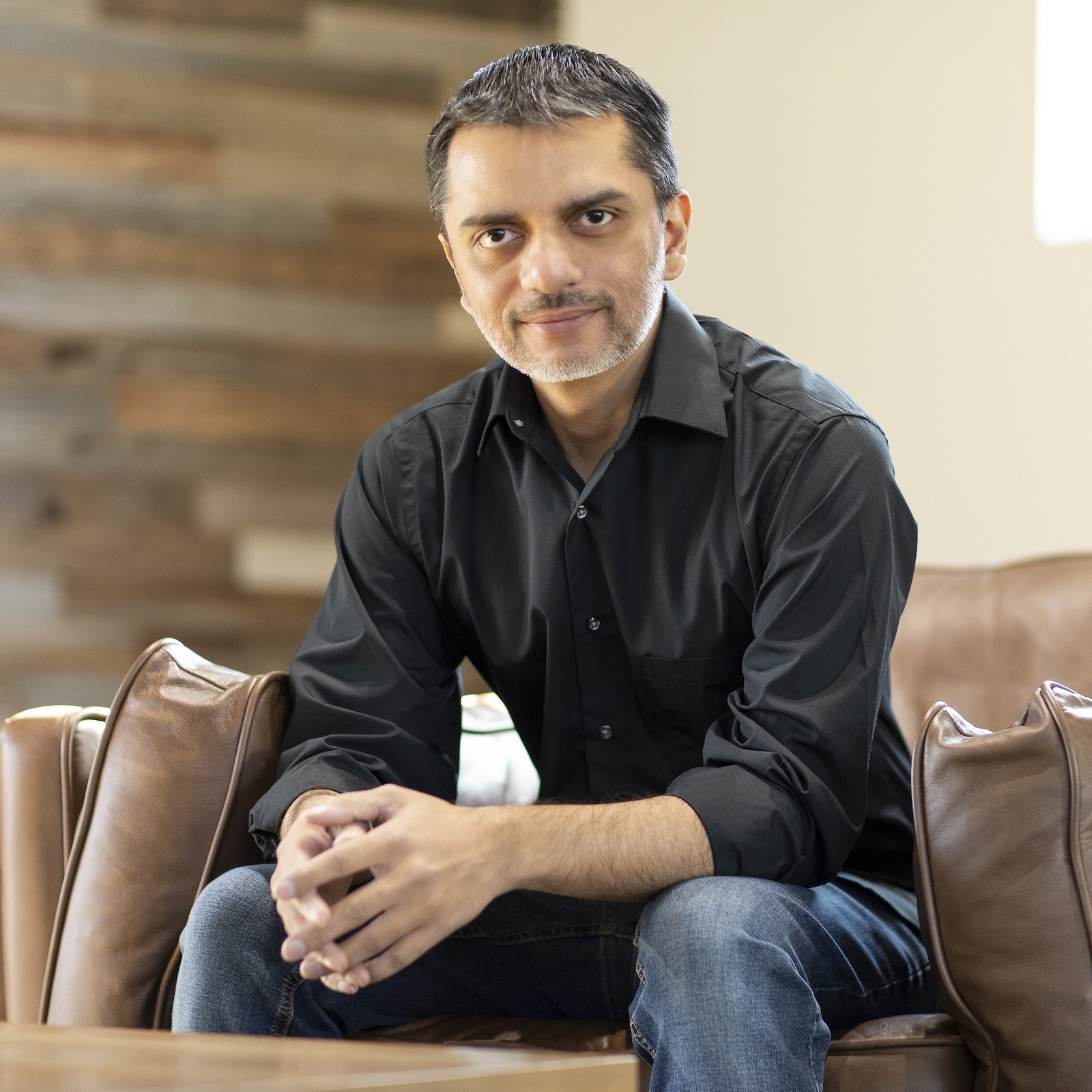
I'm a Carnegie Mellon University graduate and an Executive Technology Recruiter by trade with three decades of study and practice of the principles of the Bhagavad Gita and Dharma. I've launched courses and workshops, conducted classes, and mentored one-on-one on how to apply these timeless principles to our complex, modern lives.
My passion is to nurture spiritual maturity, personal leadership, and emotional intelligence. I help people work through the internal and interpersonal obstacles that hold them back from living with purpose and clarity. I'm especially drawn to reaching the modern, Western mind, having grown up navigating that same tension myself, between the world I was raised in and the wisdom I later came to embrace.
In My Own Words
A few years ago, I was sitting in back-to-back calls. One screen showing a candidate's resume, another buzzing with texts, a third tab open to an email I'd been meaning to send for three days. I looked up and realized I hadn't finished a single thought in over an hour. I was everywhere. Which meant, in the way that matters, I was nowhere.
That night I reread a verse from the Gita I must have read fifty times before. Krishna tells Arjuna that the mind divided among many objects loses itself in endless branches. I'd always taken that as a nice metaphor. That night it felt like a diagnosis.
I didn't grow up thinking the Gita had anything to say about inbox anxiety or doom-scrolling. But three decades into studying this text, I've come to believe the opposite. It may be the most practical manual we have for exactly this kind of modern fragmentation. Not because it's mystical, but because it's relentlessly clear-eyed about how the mind actually works, and what steadies it.
This is what Atmaventure is built on. Not theory but a working toolkit, tested in workshops, weekly chats, and one-on-one conversations with people — young professionals, parents, teenagers — just trying to figure out how to be whole in a world engineered to fragment them.
"What is night for all beings is the time of awakening for the self-controlled; and the time of awakening for all beings is night for the introspective sage."— Bhagavad Gita 2.69
Who This Is For
My Signature Framework
Whether it shows up as endless wanting, a mind pulled in a thousand directions, or constant comparison to everyone else, hyper-everything is really just the mind operating without a steady center. To return to sanity, we need an approach that marries higher intelligence (buddhi) with thoughtful, connected action (yoga). Krishna refers to Buddhi Yoga across the Gita, most especially in Chapter 2.
Buddhi is the combination of our many intelligences: academic, emotional, interpersonal, spiritual, and more. Yoga, in its fullest sense, is not just a pose but a state of interconnectedness between our inner and outer selves. Together, they offer a path to integrity across the layers of mind, intelligence, and ego because the depth of our happiness is directly proportional to the health of those layers.
Think of Buddhi Yoga as a new inner operating system, one that lets you launch the powerful applications that reinvigorate your sense of purpose and meaningful drive in life.
The mind has limited attention. Before judging anything, simply notice, without bias, without adjusting behavior, where your attention actually goes. Track a hypothesis for seven days. Ask a trusted person to note your patterns.
Once you can observe clearly, go deeper. Examine not just conscious thoughts but the subconscious roots behind your words and actions. Why did you really say that? This requires humility and honest self-examination.
Karma is action fused with its result. We're in it constantly, like air. Akarma is engaging our body, mind and words with an intelligence that aims for personal and spiritual growth. It's elevated thoughts, words and actions based on an elevated internal state of being.
Free Resource
The Multitasking Madness Worksheet puts the Buddhi Yoga Framework into practice. It's built from the same Gita verses and reflective exercises used in the live workshop.
My Approach
Drawing directly from the Bhagavad Gita and other texts where the most practical and tangible frameworks are offered for modern living.
Concrete exercises you can apply immediately. It's not abstract theory, but lived practice.
A two-way exchange, not a lecture, with vulnerability and honesty from both sides of the room.
Examples that bridge ancient teaching and the very real, very modern challenges you're facing.
From the Room
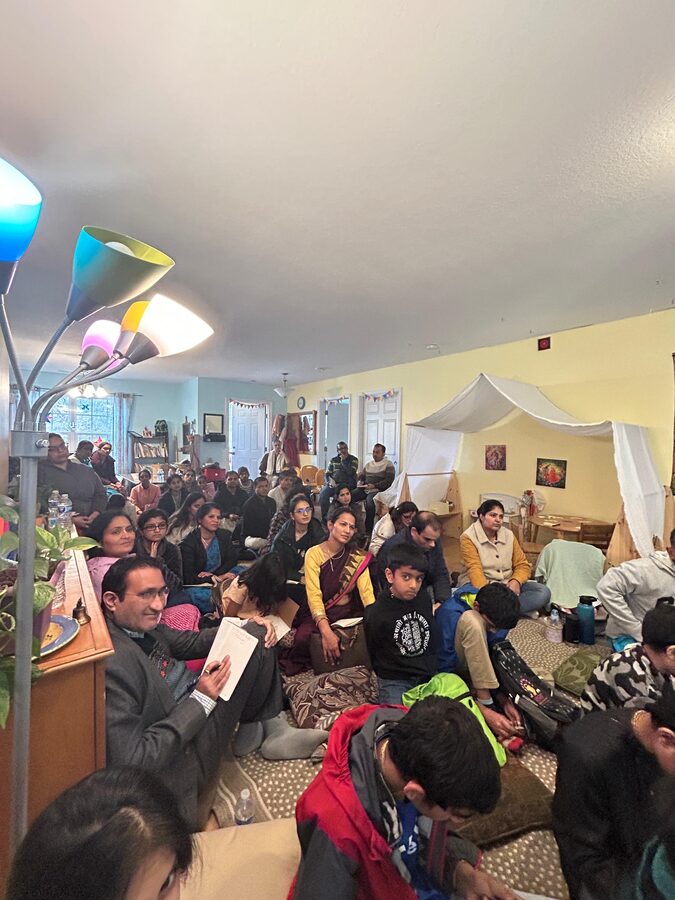
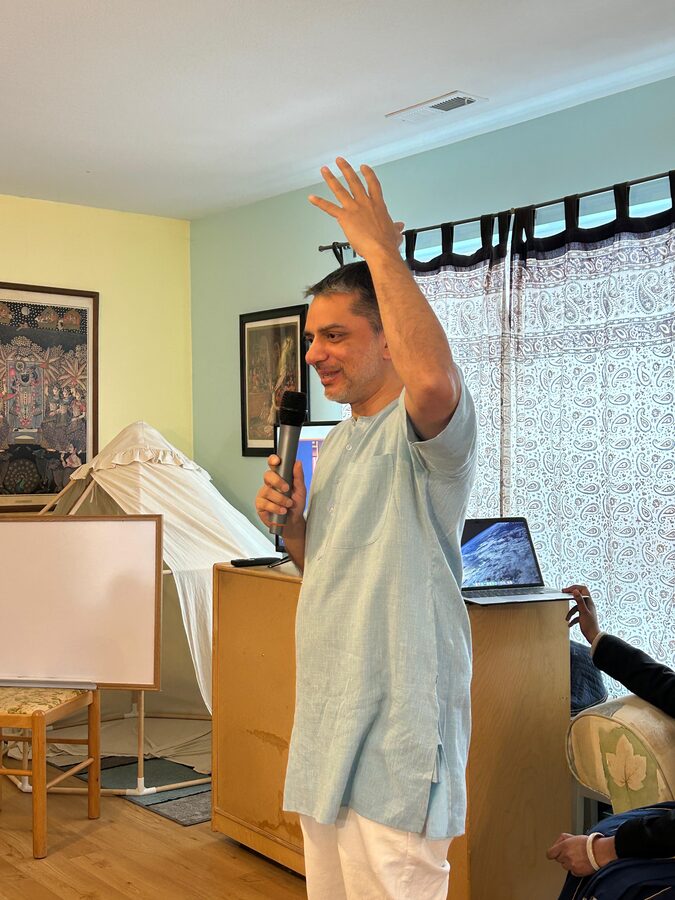
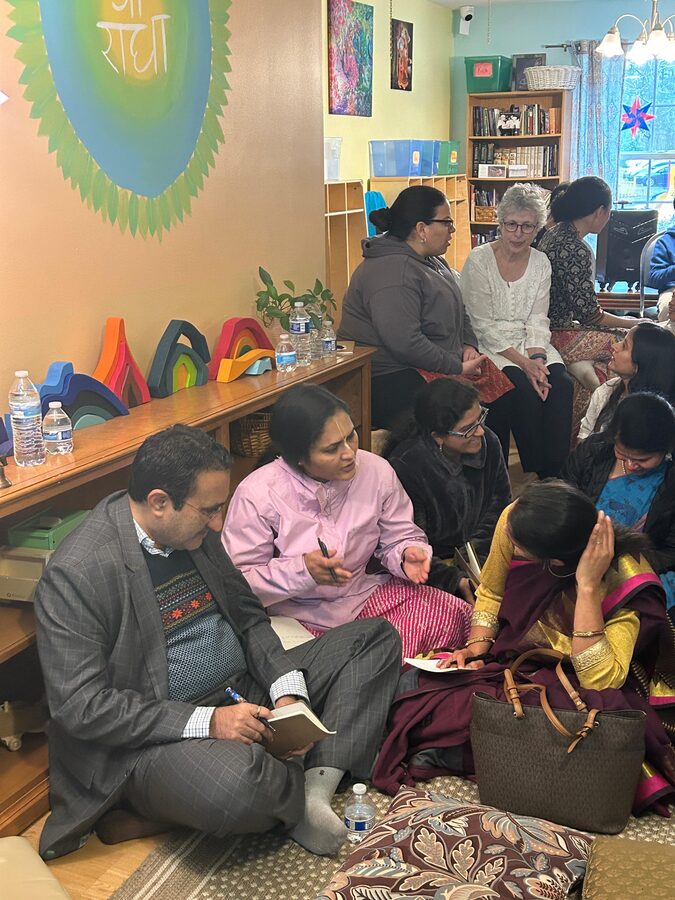
A glimpse from a recent in-person workshop. Full rooms, open notebooks, and the kind of conversation that doesn't happen over Zoom.
Recent Events & Activities
A highly interactive workshop challenging the myth of multitasking and uncovering its hidden mental and spiritual costs. Participants leave with practical strategies and a personalized action plan to restore focus, energy, and intentional living.
Are you drowning in parenting guilt? In today's hyper-connected world, the pressure to be a perfect parent is relentless. Discover how the Bhagavad Gita's ancient wisdom applies surprisingly well to modern parenting.
In partnership with Hindu Parents Network, I conducted a 6-part weekly workshop series empowering young adults with transformative life planning through the most practical frameworks of the Bhagavad Gita.
In partnership with Hindu Parents Network, I ran a 3-part series helping young adults navigate their inner and outer path in the era of hyper-competition.
In-person workshops for youth exploring the inner landscape. We covered building self-confidence, finding focus, reframing failure, and managing expectations in a high-pressure world.
Engaging, honest conversations covering self-awareness, emotional intelligence, relationships, and navigating life's complexities with wisdom and humor.
No upcoming events on the calendar just yet but one-to-one coaching is always open. Want to be notified the moment something new is scheduled?
Reach out →Voices from the Room
Attended the Dharma session by Palak last night. In fact, had my son attend it too. We both could easily relate to it — not an easy task with generational differences. Planning to attend all the sessions.— Workshop Participant
The interactive idea was the best part since we could talk about something that applies to us, like multitasking. Maybe extend the session a bit so we don't run out of time.— Attendee, Multitasking Madness, Raleigh
Stay Connected
Join upcoming in-person and online sessions on identity, focus, and modern life challenges.
See EventsPersonalized mentoring on spiritual maturity, emotional intelligence, and life direction.
InquireReflections, workshop announcements, and Eastern wisdom for modern life, straight to your inbox.
SubscribeReach Out
Whether you're looking for one-to-one coaching, want to bring a workshop to your community, or simply want to connect, I'd love to hear from you.
I work with individuals, families, youth groups, and organizations looking to integrate timeless wisdom with the realities of modern life.